
If you need support or medical assistance, our local health and care professionals are ready and waiting to provide you with the right help, at the right time, in the right place. All you need to know is which service best suits your needs.
We have put together a guide to help you to choose the right service for your needs. By knowing where to go, you’ll get the right advice, support and treatment as quickly as possible.
By thinking about which service to use, we can help to make sure everyone in Birmingham and Solihull gets the right help at the right time.
- Choose pharmacy for minor illnesses
- Choose GP practice for non-urgent care
- Choose 111 for urgent care
- Choose urgent treatment centres for urgent care
- Choose 999 or A&E for life-threatening emergencies
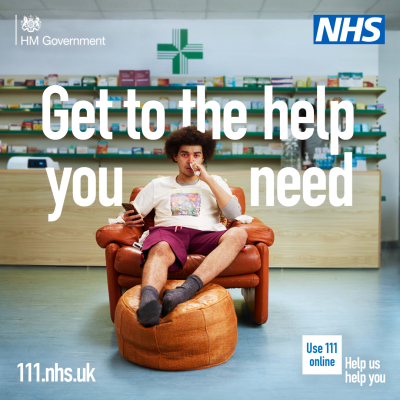
Choose pharmacy for minor illnesses
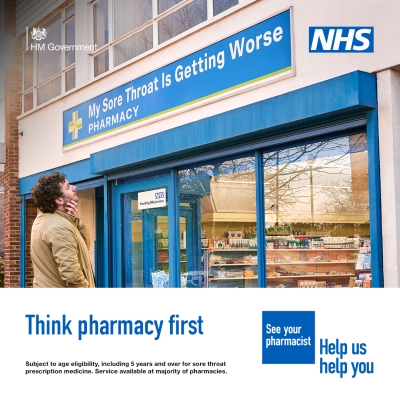
Your local pharmacist is an expert in medicine. They can offer advice, recommend over-the-counter medicines which you can buy without a prescription, and help you with a range of minor health concerns, including sore throats and ear aches. Visit the NHS website to find your nearest pharmacy.
What conditions can a pharmacist help with?
Speak to your local community pharmacist in confidence, without an appointment about:
- Coughs, colds and the flu
- Impetigo
- Sinusitis
- Sore throat
- Infected insect bites
- Shingles
- Aches, pains & minor injuries
- Oral contraception
- Skin rashes and allergies
- Urinary tract infections
- Earache
- Stomach aches such as constipation, diarrhoea, haemorrhoids, or threadworm
- Help with medication and repeat prescriptions
- Advice on healthy living – how to eat better, lose weight, exercise and stop smoking
What are the benefits of visiting your local pharmacy?
- You don’t need to make an appointment
- Your local pharmacy may have a consultation room allowing for privacy
- Many illnesses can be treated with over-the-counter medicines and advice from your pharmacy.
- A pharmacist will signpost you quickly to the right medical care if you have anything more serious.
- A pharmacist can advise on how long you can expect to experience symptoms for.
Choose GP practice for non-urgent care

The team of healthcare professionals at your local GP practice can help with persistent, recurring problems. Everyone in England can register with a GP surgery or change their GP surgery for free. Visit the NHS website to learn more.
What conditions can your GP practice help with?
Your GP practice can you support you with a number of conditions, including:
- Unexplained and sudden weight loss
- Constant fatigue and unexplained tiredness
- Persistent cough
- Yellowing skin
- Sudden, blinding headaches or migraines
- A new or growing mole
- A persistent high fever
- Changes in bowel movements
Who can help me at my GP practice?
Many local GP practice teams now include a range of healthcare professionals who are highly skilled and knowledgeable in the areas they specialise in and can diagnose and treat a variety of health conditions. You don’t always need to see a GP when you are poorly, and it is often the case that another healthcare professional is best suited to your needs due to their specific training and skills in certain areas.
Choose 111 for urgent care
You can use the NHS 111 service by either going to 111.nhs.uk or by calling 111. You should use 111 if you are not facing a life-critical situation but still need medical help right now. It may be that someone has a minor injury, they feel unwell, or they need advice about a current condition.
NHS 111 will get you assessed and directed to the right place 24/7, 365 days a year.
When should you use NHS 111?
Visit 111.nhs.uk or ring 111:
- 24/7, 365 days a year for fast and simple access to a range of medical advice.
- If you or someone you’re with has a medical problem or issue that isn’t life-threatening but you need advice on where to go.
- If you think you may require an emergency face-to-face appointment with a relevant healthcare professional.
- If you need help with getting a repeat prescription or an emergency supply.
- If you require an emergency dental appointment.
- If you need mental health assistance.
Where will NHS 111 direct you to?
NHS 111 can give you advice and help for dealing with your symptoms, arrange for you to speak to a relevant healthcare professional, organise face-to-face appointments, and provide you with information on how to get a repeat prescription and where to get an emergency supply from.
Depending on what you need, you might be advised to:
- Call 999 or go to A&E in an emergency
- Go to an urgent treatment centre
- See an evening and weekend GP (out-of-hours GP)
- Book a callback from a nurse
- Get urgent specialist support, for dental or mental health problems
- Contact your own GP surgery
- See a pharmacist for help with a minor illness
- Look after yourself safely at home
Choose urgent treatment centres for urgent care via 111
If you’ve hurt yourself, had a fall, burnt yourself or are suffering from another non-life-threatening issue, urgent treatment centres (also known as UTCs) are a fast and effective way of getting treated without the long wait in A&E.
To access urgent treatment centres, you will need to call NHS 111 or visit NHS 111 online first to speak to a professional who, if appropriate, can make an appointment for you.
When should you use an urgent treatment centre?
Without the long wait times in A&E, your local UTC can treat you for:
- Sprains and strains
- Cuts
- Broken bones, Fractures, Sprains and Strains
- Stings and Bites
- Wound infections
- Minor head injuries
- Minor burns
- Animal bites
- Minor eye injuries
- Other minor injuries
- Infections (skin, ear, eyes or urine)
If your condition cannot be dealt with at a UTC, they will refer you to your GP, the nearest A&E or another appropriate service.
Where are urgent treatment centres located?
To access urgent care or urgent treatment centres, you will need to call NHS 111 or visit NHS 111 online first to speak to a professional who, if appropriate, can make an appointment for you.
Erdington Urgent Treatment Centre
- Stockland Green Primary Care Centre, 192 Reservoir Road, Erdington, Birmingham, B23 6DJ
- Open 10:30 – 22:30, seven days a week, for anyone over one year old.
North Birmingham Urgent Treatment Centre
- Treatment Centre, Ground Floor, Good Hope Hospital, Rectory Road, Sutton Coldfield, Birmingham, B75 7RR
- Open 08:00 – 20:00, seven days a week
Solihull Urgent Treatment Centre
- Solihull Hospital, Lode Lane, Solihull, B91 2JL
- The UTC is open 08:00 – 20:00, seven days a week, providing urgent care for common issues
South Birmingham GP Urgent Treatment Centre
- 15 Katie Road, Selly Oak, Birmingham, B29 6JG
- Open 08:00 – 20:00, seven days a week, for anyone over one year old.
Summerfield Urgent Care Centre
- First floor, 134 Heath Street, Winson Green, Birmingham, B18 7AL
- Open 08:00 – 20:00, seven days a week, for anyone over one year old.
Washwood Heath Urgent Care Centre
- Washwood Heath Health and Wellbeing Centre, Clodeshall Road, Washwood Heath, Birmingham, B8 3SN
- Open 08:00 – 20:00, seven days a week, for anyone over one year old.
Choose 999 or A&E for life-threatening emergencies

Our emergency departments are open 24 hours a day if you have a life-threatening emergency.
Please keep 999 and A&E free for genuine life-threatening emergencies and use NHS 111 online or call 111 or use an urgent treatment centre for other urgent care needs.
When to dial 999 or go to A&E:
- Signs of a heart attack
- Signs of a stroke
- Sudden confusion
- Severe difficulty breathing
- Choking
- Heavy bleeding
- Severe injuries
- Seizure
- Sudden, rapid swelling
British Sign Language (BSL) speakers can make a BSL video call to 999.
- Deaf people can use 18000 to contact 999 using text relay